

What Are Chemical Peel Facials — and Which One Is Right for You?
Chemical peel facials are one of the most effective and cost-efficient ways to resurface your skin, treat acne scars, and reverse signs of aging — without surgery or significant downtime.
Here’s a quick overview of what they do and how they compare:
| Peel Depth | Best For | Downtime |
|---|---|---|
| Superficial (Stimulator Peel) | Fine lines, mild acne, dullness | None to 1-3 days |
| Medium (The Perfect Peel) | Acne scars, hyperpigmentation, sun damage | 7-14 days |
| Deep | Severe wrinkles, precancerous lesions | 14-21 days |
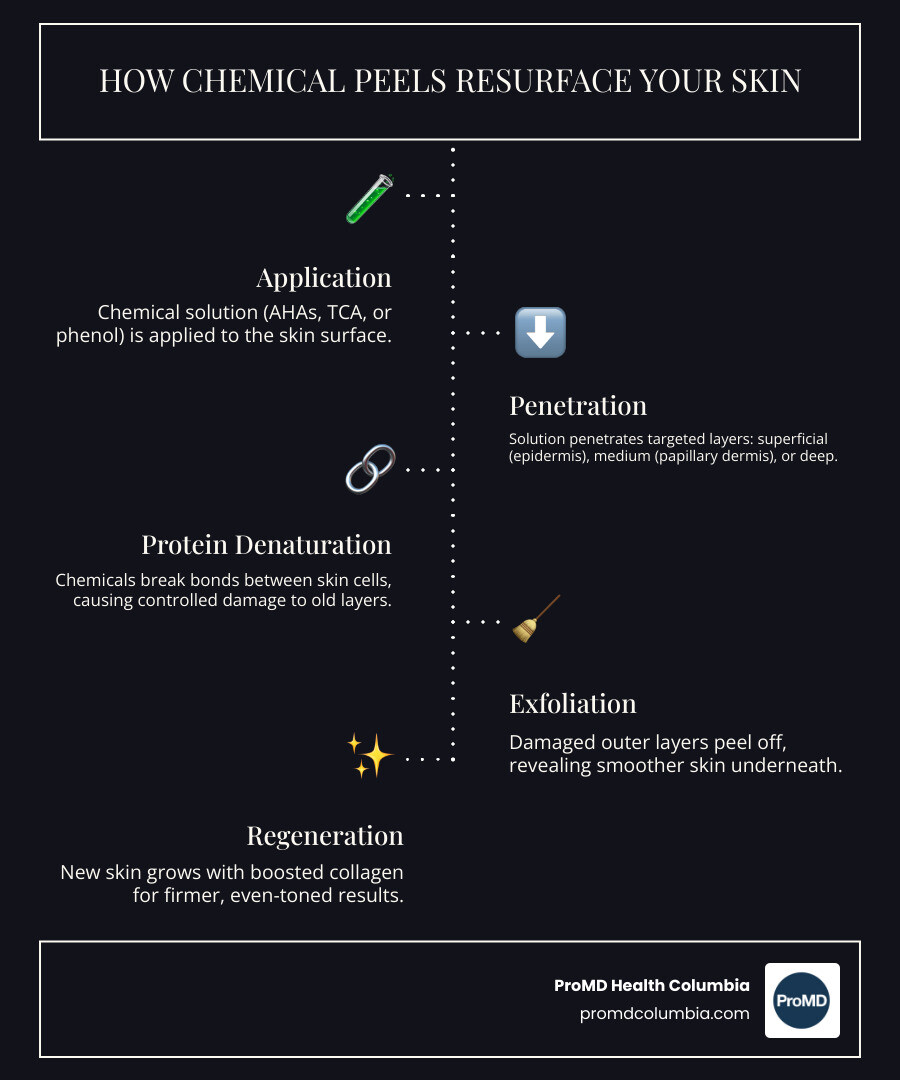
A chemical peel works by applying a chemical solution to the skin that causes controlled exfoliation of the outer layers. As those layers shed, fresher, smoother, more even-toned skin grows back. The process also triggers your skin’s natural healing response — stimulating collagen production for firmer, more youthful skin.
Not all peels are the same. The depth of the peel, the chemical used, and your skin type all determine what results you’ll see — and how long it takes to get there.
This guide covers everything you need to compare your options: how each peel depth works, what skin concerns each one targets, how peels stack up against treatments like microneedling or HydraFacial, and what to expect before and after your session at ProMD Health Columbia.
Understanding Chemical Peel Facials and How They Work
At its core, a chemical peel is a form of “chemexfoliation.” While that sounds like something out of a chemistry textbook, it’s actually a very controlled way of saying “out with the old, in with the new.” When we apply a professional chemical solution to your face, neck, or hands, we are essentially performing a strategic skin resurfacing.
The chemicals used—ranging from mild alpha-hydroxy acids (AHAs) like glycolic acid to stronger trichloroacetic acid (TCA) or phenol—work by breaking the bonds between skin cells. This process is known as protein denaturation. Think of it like a reset button for your face. By removing the damaged, dull outer layers, we allow the healthier skin underneath to take center stage.
But the magic isn’t just on the surface. When these solutions penetrate the skin, they create a “controlled injury.” Your body, being the overachiever it is, rushes to heal that injury by boosting collagen stimulation. Collagen is the protein responsible for keeping your skin plump, bouncy, and youthful. As we age, our collagen production slows down (thanks, biology!), and chemical peel facials are a fantastic way to remind your skin to get back to work.
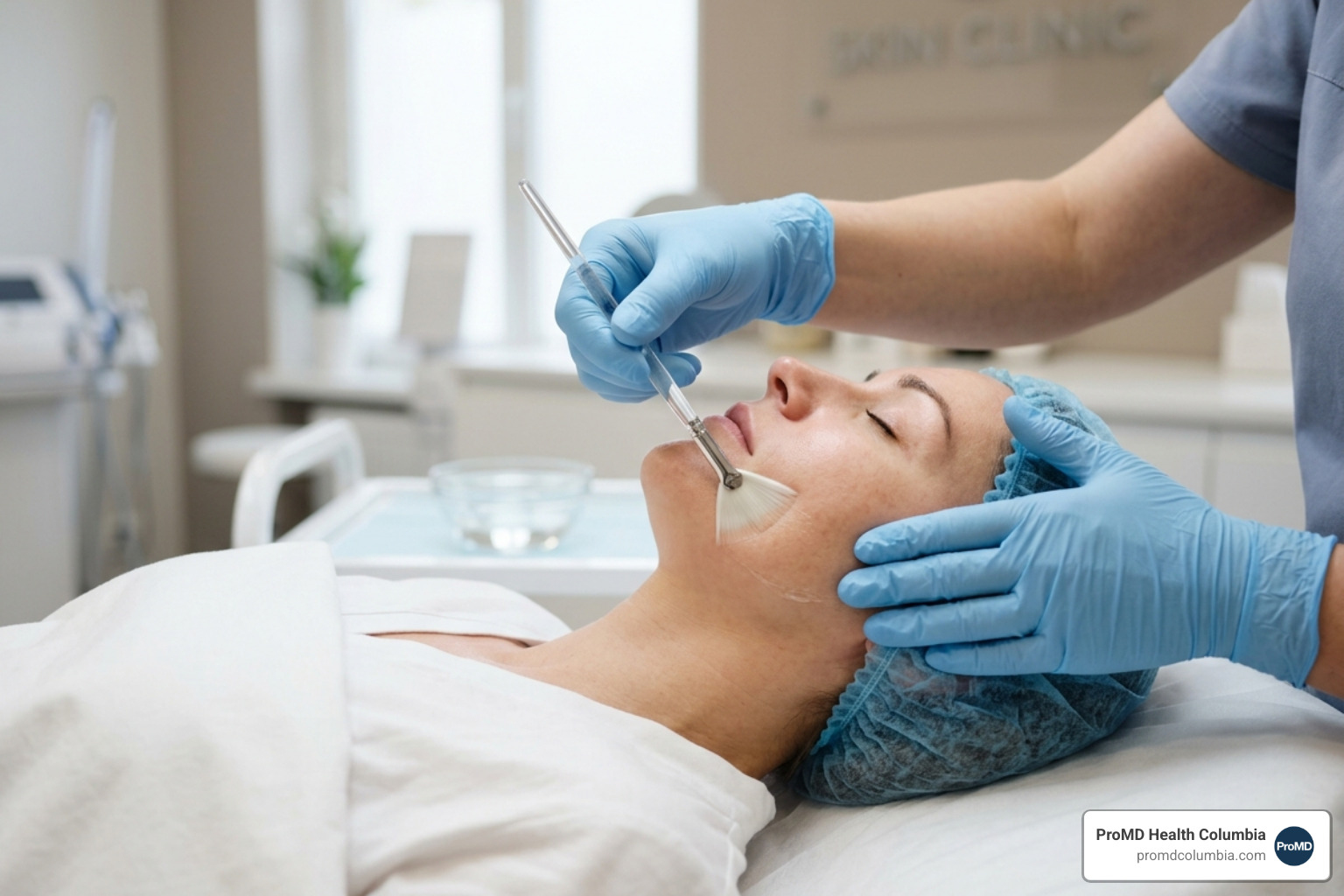
During the Chemical Peel Procedure Overview, the solution is applied in a specific order—usually starting from the forehead and moving toward the chin. You might feel a bit of stinging or warmth—that’s just the chemicals doing their job. Depending on the strength of the peel, we may use a neutralizing agent or simply let the peel self-neutralize over time.
Comparing the Depths: Superficial vs. Medium Peels
Choosing the right depth is the most important part of your consultation at ProMD Health Columbia. We don’t believe in a one-size-fits-all approach; your skin is as unique as your fingerprint.
Superficial Peels: The “Lunchtime” Glow-Up
Superficial peels, like the ZO Stimulator Peel, are often called “lunchtime peels” because they are so gentle you can practically get one on your break and head straight back to work. These peels only target the epidermis (the outermost layer of skin).
- Best for: Mild skin discoloration, rough texture, and fine lines.
- Ingredients: Usually mild acids like salicylic, lactic, or glycolic acid.
- Recovery: Almost none. You might have a slight glow or very mild flaking for a day or two.
- Frequency: To maintain that “just-peeled” radiance, we recommend these every 4 to 8 weeks.
Medium Peels: The Transformation
If you’re looking to tackle deeper issues like acne scars or significant sun damage, a medium-depth peel is your best friend. These penetrate through the epidermis and into the upper part of the dermis (the papillary dermis).
- The Perfect Peel: This is a fan favorite at our Columbia, MD office. It’s a medical-grade peel that includes Glutathione—the “ultimate antioxidant.” It brightens the skin while tackling aging and pigment issues.
- Best for: Acne scars, moderate wrinkles, and uneven skin tone.
- Recovery: Expect about 7 to 14 days of healing. You will likely experience actual peeling (yes, like a snake—but a very beautiful snake).
- Frequency: These are typically done every 6 to 12 months, or as a short series for specific corrective goals.
Deep Peels: The Heavy Hitters
Deep peels reach the mid-reticular dermis. Because they often use phenol, they require much more caution and longer recovery times. These are typically one-time procedures for severe photoaging or precancerous growths. At ProMD Health, we focus on providing the most effective results with the least amount of unnecessary risk, often achieving incredible transformations through customized medium-depth protocols.
For more details on our specific offerings, check out More info about chemical peel services.
Targeted Solutions for Acne Scars and Hyperpigmentation
One of the most common reasons patients visit us in Howard County is to address the lingering reminders of past breakouts. Acne is frustrating enough when it’s active, but the scars and dark spots it leaves behind can feel like a permanent cloud over your confidence.
Chemical peel facials are highly effective at treating:
- Post-Inflammatory Hyperpigmentation (PIH): Those red or brown flat spots that stay long after a pimple is gone.
- Atrophic Acne Scars: Shallow pits or “rolling” scars. By stimulating collagen, peels help “fill in” these depressions from the bottom up.
- Melasma: Often called the “mask of pregnancy,” this hormonal pigmentation can be stubborn, but the right peel can lift the dark patches.
- Actinic Keratosis: These are dry, scaly patches caused by years of sun exposure. According to the Mayo Clinic, left untreated, these carry a 5-10% risk of turning into squamous cell carcinoma. Deep or medium peels can actually help remove these precancerous cells.
According to Scientific research on chemical peels for acne, salicylic acid peels are particularly effective for oily, acne-prone skin because they are lipophilic—meaning they can get right into the pores to dissolve the “glue” holding dead skin and oil together.
Professional Chemical Peel Facials vs. Alternative Treatments
We often get asked, “Why should I get a chemical peel instead of a HydraFacial or laser treatment?” The answer depends on your goals, your skin type, and how much downtime you can afford. You can find More info about facial services on our site to see the full range of what we offer.
Chemical peel facials vs. Microneedling
Microneedling (we use the SkinPen) is a “physical” resurfacing treatment. It uses tiny needles to create micro-channels in the skin.
- The Verdict: Microneedling is excellent for deep “ice pick” scars and overall skin tightening. However, chemical peel facials are often superior for surface-level pigment issues and “brightening” the skin tone. Sometimes, we even combine these treatments (at different times!) for the ultimate skin overhaul.
Chemical peel facials vs. Laser Resurfacing
Lasers use light energy to target specific colors (like red or brown) or to vaporize skin layers.
- The Verdict: Lasers can be very precise, but chemical peels are often more cost-effective for treating the entire face at once. For patients in Columbia looking to treat broad sun damage without the price tag of some high-end lasers, a medium-depth peel is an unbeatable value.
Choosing chemical peel facials for sun damage
Living in Maryland, we get our fair share of sun, whether it’s at the Inner Harbor or out in Howard County. Over time, UV damage leads to photoaging—those fine lines and “liver spots” that make us look older than we feel. Chemical peel facials are specifically designed to “peel away” this sun-damaged layer, revealing skin that hasn’t been touched by the sun’s harsh rays.
Preparation and Aftercare for Optimal Results
If you want the best results, you have to do your homework! Preparing your skin is just as important as the peel itself.
Pre-Peel Restrictions (1-2 weeks before):
- Stop the Retinoids: Avoid Retin-A, Differin, or any retinol products. They make your skin too sensitive.
- No Waxing: Don’t wax or use depilatory creams on the treatment area.
- Sun Protection: This is non-negotiable. Avoid tanning beds and direct sun exposure. If you arrive with a sunburn, we cannot perform the peel.
- Anti-Viral Meds: If you have a history of cold sores, let us know! Peels can trigger a breakout, so we may prescribe a preventative medication.
Aftercare: The Golden Rules After your treatment, your skin is “new” and very vulnerable.
- Hands Off: Do not pick, pull, or scrub the peeling skin. Picking can lead to permanent scarring or infection. Let it fall off naturally.
- Moisturize: Use the gentle cleansers and ointments provided in your post-procedure kit.
- SPF 50+: Your new skin has no natural protection against the sun. Wear a broad-spectrum SPF 50+ every single day, even if it’s cloudy in Ellicott City.
- Avoid Heat: No saunas, hot tubs, or intense workouts for the first 48-72 hours.
Frequently Asked Questions about Chemical Peels
Are chemical peels safe for all skin tones?
This is a vital question. In the past, deeper peels were risky for patients with darker skin tones (Fitzpatrick types IV-VI) because they could cause post-inflammatory hyperpigmentation.
However, modern formulations like PCA SKIN peels and The Perfect Peel are designed to be safe for all ethnicities. At ProMD Health Columbia, we perform a thorough professional assessment of your skin type before choosing a solution. For darker skin, we often “start low and go slow” with superficial peels to ensure the skin reacts beautifully without any unwanted pigment changes.
How much do chemical peels cost?
Because chemical peel facials are considered a cosmetic procedure, they are generally not covered by insurance. The cost varies depending on the depth and the specific formulation used. Superficial peels are very affordable, while medium-depth peels like The Perfect Peel cost more due to the intensity of the ingredients and the expertise required to apply them. Many of our patients choose a treatment series to maximize their results and their budget.
How often should I get a chemical peel?
- Superficial Peels: Every 2 to 5 weeks for a series of 3 to 5 treatments to see lasting results.
- Medium Peels: Every 6 to 12 months for maintenance.
- Deep Peels: Usually a once-in-a-lifetime procedure for the face.
Conclusion
Whether you’re looking to erase the evidence of teenage acne, brighten up sun-damaged skin, or simply want that “red-carpet glow,” chemical peel facials at ProMD Health Columbia offer a customized, medical-grade solution.
Our expert team—including Jennifer Aponte, PA-C, Sabina Sambat, NP, Daisey Cormier, NP, Jennifer Nicholson, Jessica Windsor, Stephanie Aponte, and Amaya Roeder—is dedicated to helping you achieve your skin goals safely and effectively. We combine clinical expertise with a warm, welcoming environment right here in Columbia, MD.
Ready to see what’s hiding under those dull outer layers? We invite you to experience the ProMD difference. You can even use our Entity Med AI Simulator to preview your potential results before you even sit in the chair!
For more information or to schedule your consultation, visit More info about professional peels. We can’t wait to help you put your best face forward!

